Work · Register entry
The Desk That Goes Up Is Cheaper Than the One That Doesn't
Adjustable furniture looks like a line item. Replacing the person who left because of it looks like something else entirely.
- Measure
- The Desk That Goes Up Is Cheaper Than the One That Doesn't
- Where it bites
- Any office fit-out
- Signed off by
- Facilities
- Order of cost
- Low thousands, once
The arithmetic nobody runs
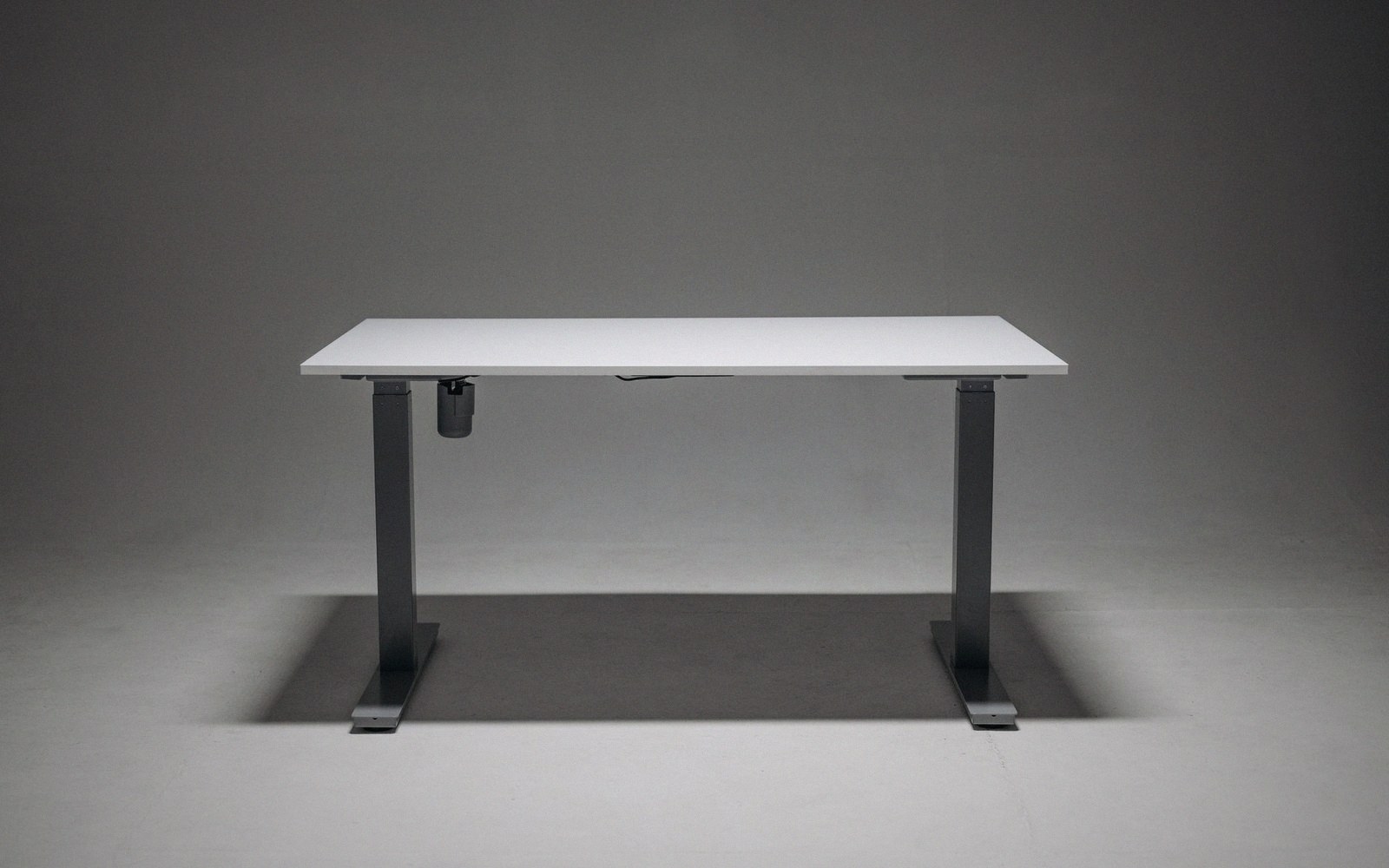
A height-adjustable desk — a sit-stand unit with memory settings and adequate weight rating — costs somewhere between £300 and £900 in standard public procurement, depending on specification and volume contract. That is the number that gets questioned at sign-off. The comparator number rarely appears in the same conversation.
Published estimates of recruitment and replacement costs vary, but the Chartered Institute of Personnel and Development has consistently put the average cost of replacing an employee in the UK at several thousand pounds when direct costs alone are counted: advertising, agency fees, onboarding, and the productivity gap while a role is covered or empty. When indirect costs are included — management time, lost institutional knowledge, colleague disruption — the figure rises further. For specialist or senior roles, multipliers of six to nine months' salary are not unusual in the literature.
A reasonable adjustment that would have cost £600 and avoided a resignation therefore looks, in full-cost accounting, like the cheapest decision on the table. It rarely gets accounted that way.
Why the comparison doesn't happen
The costs sit in different budgets. Facilities or HR signs off the desk; turnover costs dissolve across recruitment, payroll and departmental time in ways that never aggregate into a single figure anyone is asked to explain. No one receives a memo reading "we spent £8,000 replacing the person we wouldn't buy a desk for." The causal chain is invisible by the time it completes.
There is also a timing problem. The adjustment request arrives today, with a cost attached. The resignation, if it comes, arrives months later and is attributed — often genuinely — to a range of factors. Organisations that count who applied, not who got in, frequently have the same blind spot at exit: the data is not collected in a way that surfaces the barrier.
This structural invisibility is not unique to furniture. It applies to any reasonable adjustment with an upfront cost and a diffuse, delayed benefit. But height-adjustable desks are a useful test case because the cost is concrete, the procurement route is well established, and the adjustment is among the most common requested by employees with musculoskeletal conditions, those who use wheelchairs or have variable fatigue, and workers returning from injury or illness.
Running the number properly
A facilities manager asked to justify a sit-stand desk should be able to place it against a fully-loaded replacement cost. If the organisation knows what it costs to recruit into that role — and most HR functions can produce a defensible estimate — the business case writes itself in one line. A £600 desk against a £6,000 recruitment exercise is a 10:1 return on a decision that also satisfies the duty to make reasonable adjustments.
Where the desk is part of a broader workstation assessment, the cost picture remains favourable. A complete ergonomic assessment and refit — chair, monitor arm, keyboard, desk — can reach £1,500 to £2,000 in full. That still sits well inside any honest reckoning of what a vacant post costs to fill.
The adjustment that stalls is rarely stalling because the organisation ran the numbers and concluded it was unaffordable. It stalls because nobody ran them. The desk that goes up costs money that is visible. The desk that doesn't goes on costing money that isn't — until someone leaves, and the invoice arrives in a form no one recognises as one.
Related entries
Same file, different signature.